
Going to Mexico City, you definitely need to visit this beautiful wonder of nature. Lake Xochimilco is an ancient lake in southern Mexico City. Wild gardens, an abundance of animals, birds, and plants will attract the close attention of everyone who decides to go here on a journey.
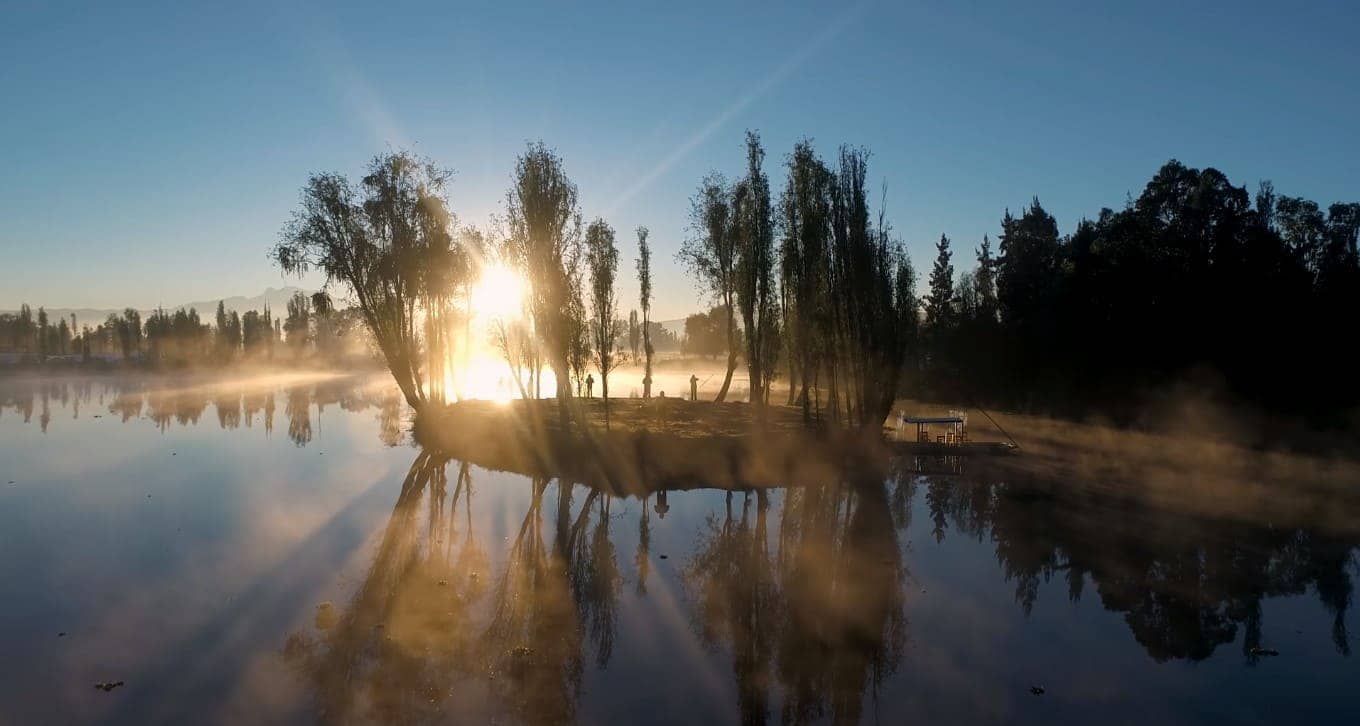
The Xochimilco characteristics
- Maximum depth of channels is 5 feet
- Length is 2 miles
- Average width is 208 feet
- Square with channels is 42007 acres
| What it is | A UNESCO World Heritage maze of canals and artificial islands — the last living piece of the great lake that once filled the Valley of Mexico |
| Where | A borough in the south of Mexico City, about 28 km (17 mi) from the Zócalo |
| Canals | Roughly 170 km (105 mi) of navigable waterways |
| Famous for | Trajineras (painted boats), chinampas (Aztec floating gardens), the axolotl, and the Island of the Dolls |
| Heritage status | UNESCO World Heritage since 1987; a UN-FAO globally important agricultural heritage site since 2018 |
| A trajinera ride | About 500–600 pesos per hour, hired by the boat (not per person); boats run roughly 9 a.m.–6 p.m. from six official embarcaderos |
Riding a trajinera: the real Xochimilco experience
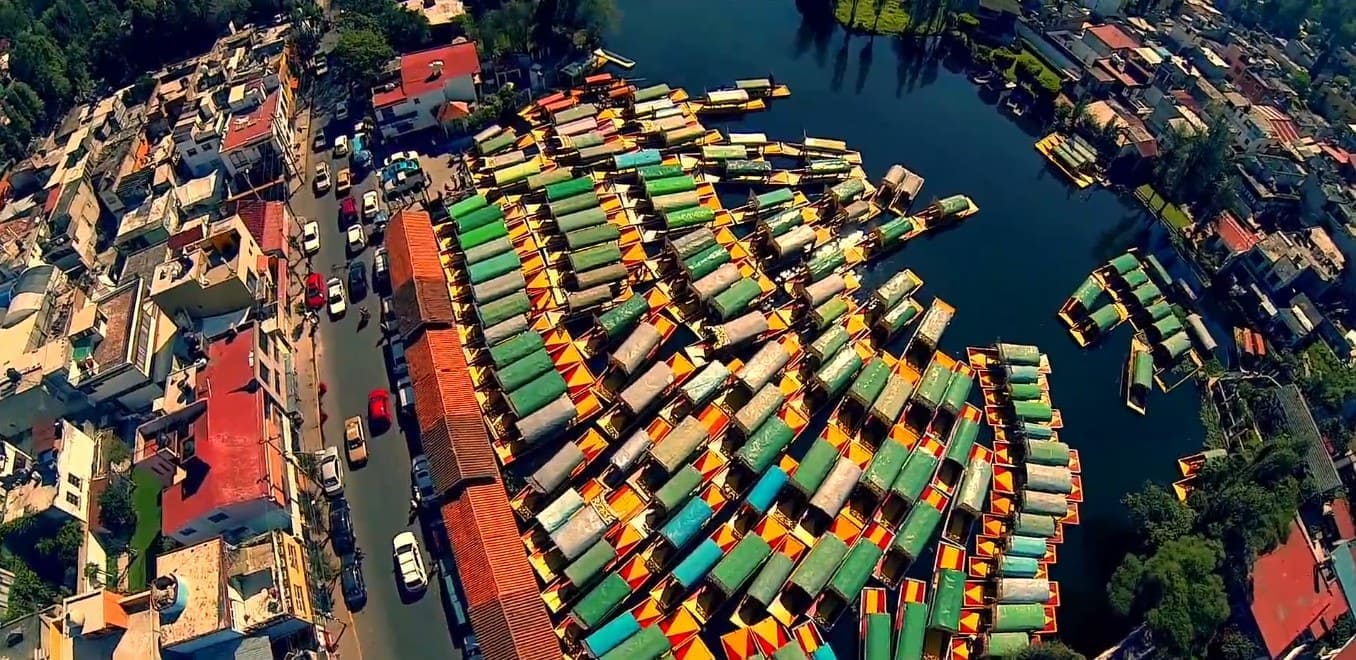
The thing nearly everyone comes for is a ride aboard a trajinera — a long, flat-bottomed boat painted in carnival colours, its arch spelling out a woman’s name in flowers. You hire the whole boat by the hour, around 500–600 pesos (roughly US $30–$35) for a dozen or more people rather than per head, so it is at its best with a group. As the trajinero poles you along the willow-lined channels, smaller boats slide up alongside selling elotes and esquites, ice-cold micheladas and beer; wave one over and a full mariachi band will even step aboard to play a song or two for a set fee. On weekends the wider canals become a floating fiesta — arrive on a weekday morning instead and the same water is mirror-calm and almost empty.
The chinampas: the Aztec floating gardens
The little islands you glide between are not natural. They are chinampas — the famous “floating gardens” that the Xochimilca and later the Mexica engineered more than seven centuries ago, staking out rectangles in the shallows, weaving a frame of reeds and heaping it with fertile lake mud. Pinned in place by the roots of willows planted at each corner, these plots are astonishingly productive, giving up to seven harvests a year, and they once fed the Aztec capital of Tenochtitlán. About six thousand chinamperos still work them by hand today, which is exactly why UNESCO added Xochimilco to its World Heritage list in 1987 and the UN’s Food and Agriculture Organization named it a globally important agricultural heritage site in 2018. They are the surviving heart of the same chain of lakes that once included Lake Texcoco and Lake Chalco.
The axolotl: Xochimilco’s living legend
Hidden in these same canals lives one of the strangest animals on earth: the axolotl, a salamander that never grows up, wears a feathery pink crown of gills and can regrow a lost limb — even parts of its heart and brain. Xochimilco is the only place it still survives in the wild, and it is in real trouble; surveys have counted as few as a few hundred left, squeezed by pollution, the creeping city and introduced carp and tilapia that devour the young. Several chinampas now double as axolotl refuges where biologists from the UNAM university and local farmers filter the water and rebuild habitat, and a handful of small ajolotarios let you meet the “water monster” face to face.
When to visit, costs and is it safe?
Trajineras run every day from about 9 a.m. to 6 p.m. For the lively, music-filled version, go on a Saturday or Sunday; for calm water and the best photographs, come on a weekday morning. Bring cash in small bills — boats, mariachis and snack vendors do not take cards — and always agree the price before you climb aboard. The main embarcaderos are touristy and safe enough by day; as anywhere in a big city, keep an eye on your belongings. The easiest way in from the centre is Metro Line 2 to Tasqueña, then the Tren Ligero light rail to its last stop, Xochimilco (about an hour all in). And around the Day of the Dead, the canals stage the haunting night-time La Llorona show, a torch-lit retelling of Mexico’s weeping-ghost legend performed straight from the water.
History of the lake
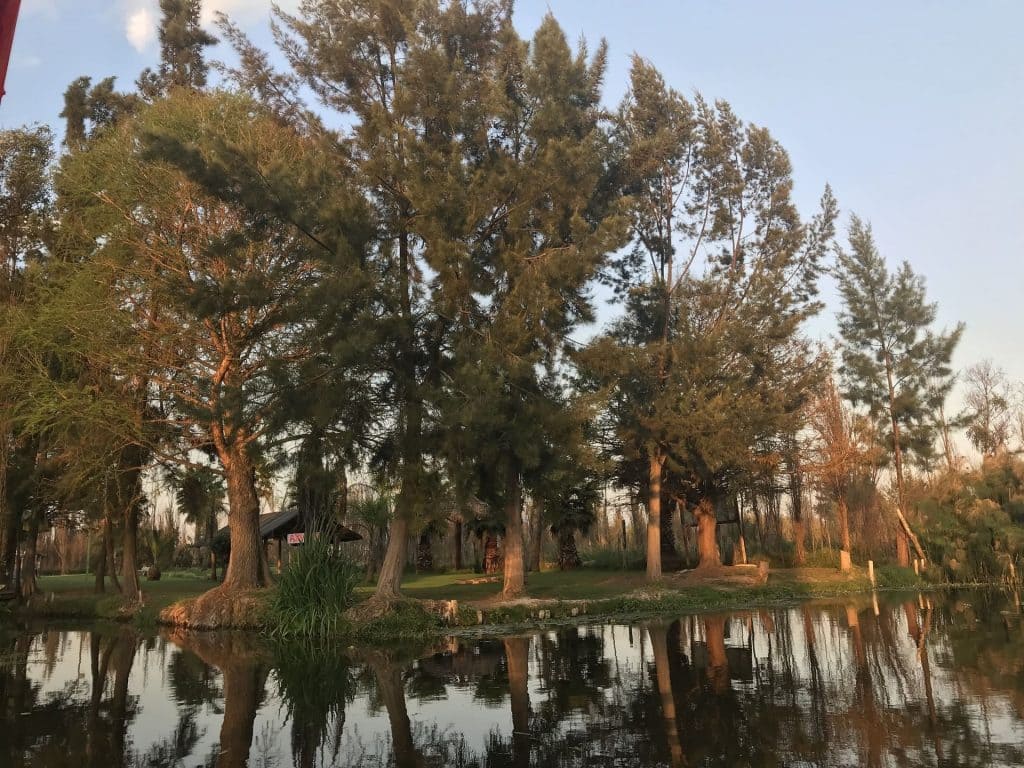
Lake Xochimilco has actually been a part of 5 historically significant lakes for a long time. This was an indisputable fact from ancient times to the ice age. After the global melting of glaciers, the climate in Mexico has also changed. Heat has become an obstacle to filling the lakes with new waters from melting snow.
As a result, the water level in the lake system began to decline sharply. Already in the 14th century, the Aztec tribes who settled on the shore of the lake began building new dams. So it was created Lake Xochimilco.
Today the system of 5 lakes has disappeared, and now we can see only Lake Xochimilco with a large system of water channels.

Wild nature on Lake Xochimilco
The world of animals and plants here is so diverse that it is difficult to list all species, and not to forget one of them. On the lake can be found, as well as widespread plant species, and endemic species. For example, water lily is sometimes a problem for the cleanliness of Lake Xochimilco. The plant grows on an incredibly large scale.
An important rare plant is the “achiote”. It grows in the small depths of the lake and its canals.
Among the animals, many aquatic inhabitants live on the lake.
Here is species you can see here:
- Freshwater crayfish
- Frog Moctezuma
- Amphibian

An interesting fact: during the reign of the Aztecs, the amphibian acocil was an effective medicine, food and at the same time an object during ceremonies and celebrations.
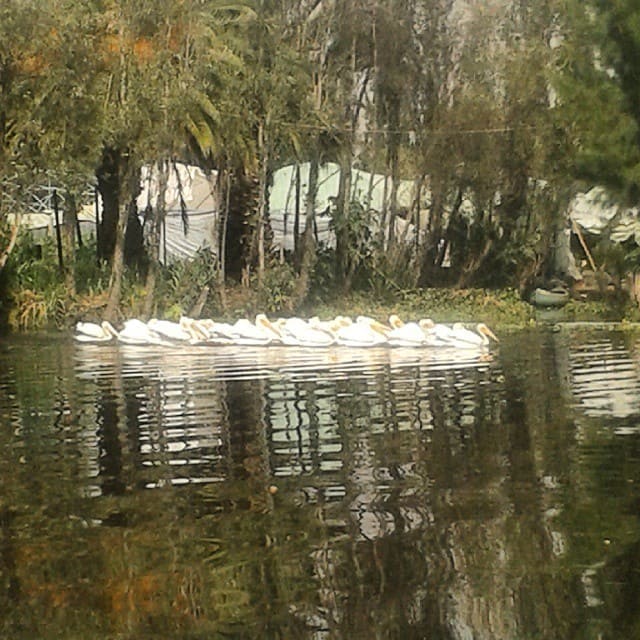
In addition, Lake Xochimilco is home to nearly half of all migratory birds of Mexico. Among the birds are:
- Pelicans
- Storks
- Falcons
- Buzzards
Parks and reserves
Lake Xochimilco is an ideal place for sports recreation and active pastime. Right on the coast, there are two sports centers Pista Olimpica de Remo y Canotaje Virgilio Uribe and Spain Club Xochimilco. They have all the conditions for cycling, rollerblading, and kayaking. Bad weather is not a hindrance if you are going to spend a weekend here with your family. The complex on the territory of the park has a pool, billiards, as well as cozy cafes for hearty lunches and dinners.
Tourists who want to get as close as possible to untouched nature should definitely pay attention to Forest Nativitas State Nature Reserve (Bosque De Nativitas), which is 1 mile from the south of the Xochimilco. Here you will find yourself in the real jungle and admire the wildlife!

How to spend time on the lake
As you remember, Lake Xochimilco is a lake with a large system of water channels. That is why Lake Xochimilco is a great place for boating. Here it is very popular especially among locals who love boat trips on weekends. The rent a boat for an hour on the lake you need 25 US dollars.
Xochimilco Ecological Park and Plant Market is the nature reserve of Mexico. It includes a Botanical Garden, bird sanctuary, Chochilta garden, and tourist recreation area.
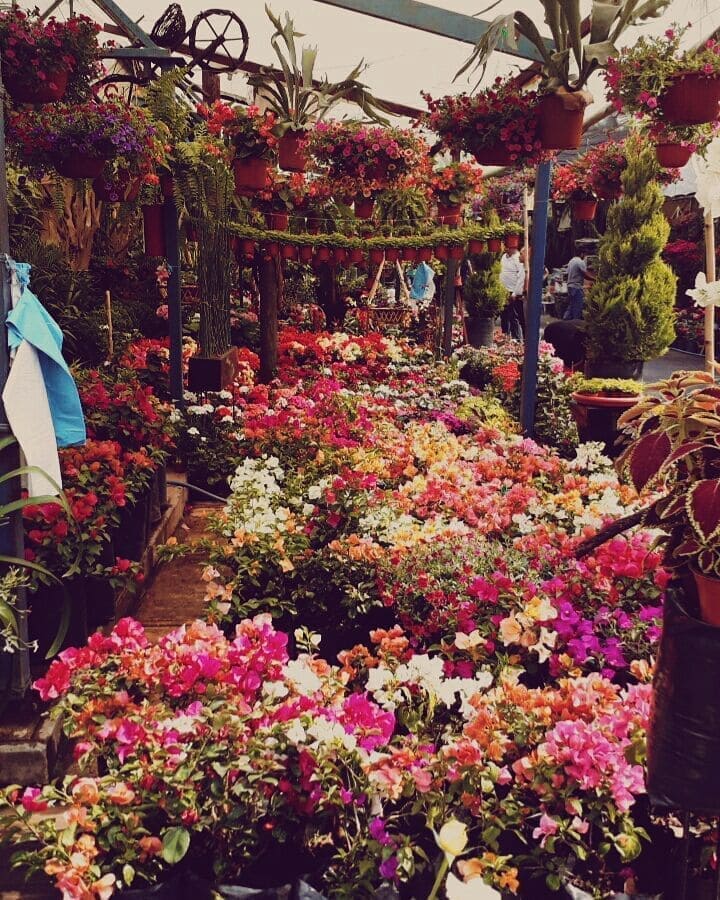
The Xochimilco is one of the areas in which there are unusual beautiful gardens. Here you can buy souvenirs, plants for home or cottage and feed the birds.
Horrific landscapes of the island of dolls
The Island of the dolls is one of the most attractive and at the same time frightening places, located in the canals of the lake.
The island is full of broken and old dolls that hang from trees. It looks both mysterious and terrifying at the same time. Of course, curious tourists madly want to get here and find themselves in the atmosphere of a frightening island.
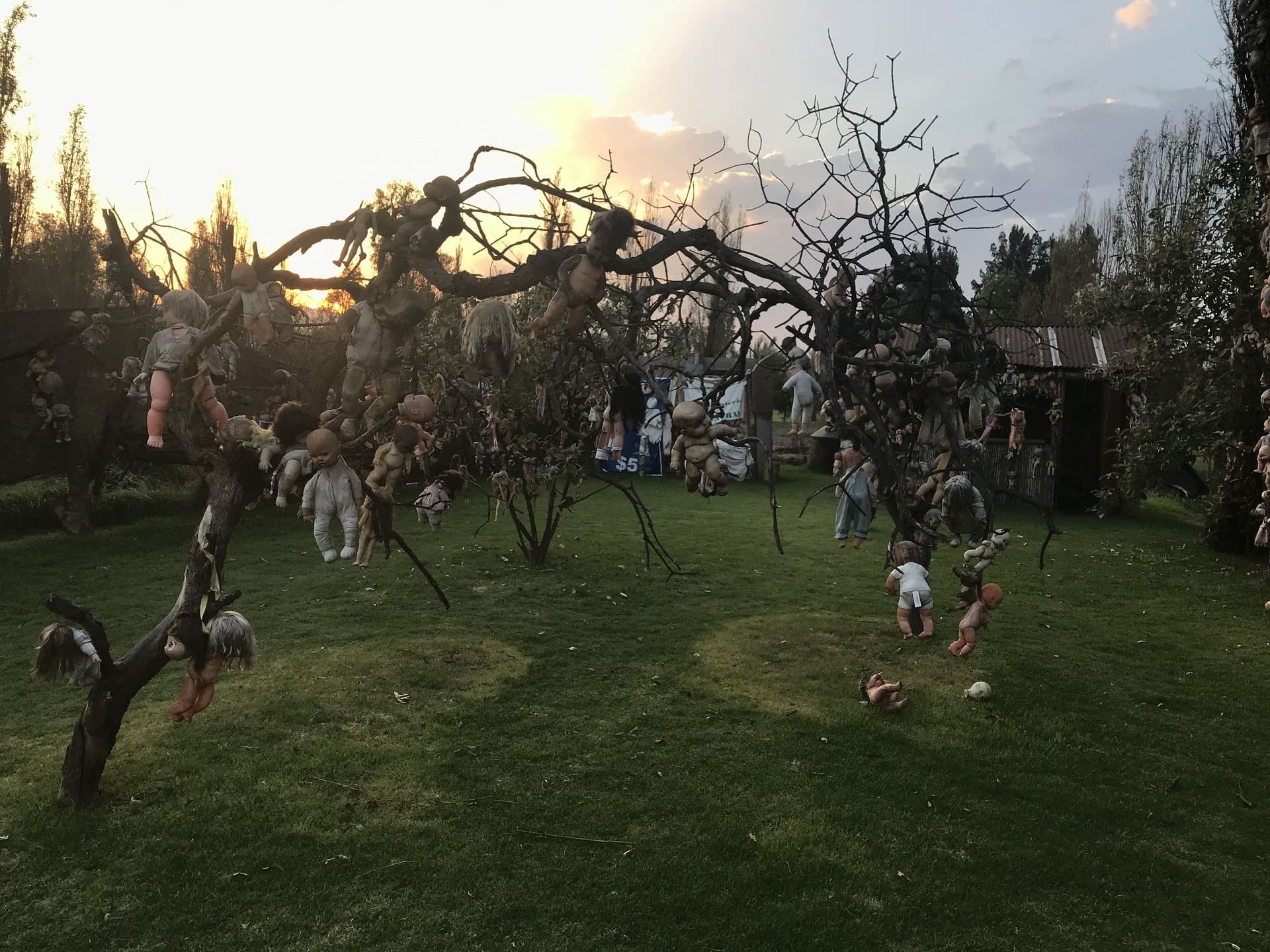
The story of the dolls appearance is connected with 1950 year. A young woman drowned in the waters of Lake Xochimilco, and the owner of the island, Julián Santana, believed that the dolls would chase away the spirit of the dead woman. Since then, a huge number of dolls of different styles fill this island and attract tourists.
Locals and foreigners love boating to see these horrific landscapes. A boat trip costs about 42 US dollars. If you are smart, you can bargain and pay only 32 US dollars.
Beautiful cities around
Of course, this is Mexico City – the great capital of the highland country with more than 100 places of interest.
Start with the main city square, Plaza de la Constitucion. Its other name is Zócalo. By right, this area is considered the largest and most beautiful in all of Mexico. Exactly at 6 pm, there is a solemn ceremony of raising the national flag. Do not lose the chance to see this amazing sight!
Just across the square, you will find Cathedral Metropolitana. This magnificent Baroque cathedral dates back to the 16th century. Entrance to the cathedral is free. And next to the cathedral in the evenings you can see the energetic dances of Mexicans disguised as Indians. It is worth seeing for everyone.
You can get from Mexico City’s airport to the central square by almost any public transport. In order not to catch traffic jams and get to quickly use the subway. This is the blue line (№2), you need to go to the station Zocalo.
Good conditions for life
To stay in the lake for several days, you can rent a room in one of the sports centers on its shore or in a hotel on the coast. There are a lot of them.
If the atmosphere of the lake is to your liking, if you are not confused by the neighborhood with the ambiguous place of the island of dolls, and you would like to stay here to live, then why not? This is a beautiful ecologically clean area with developed infrastructure.
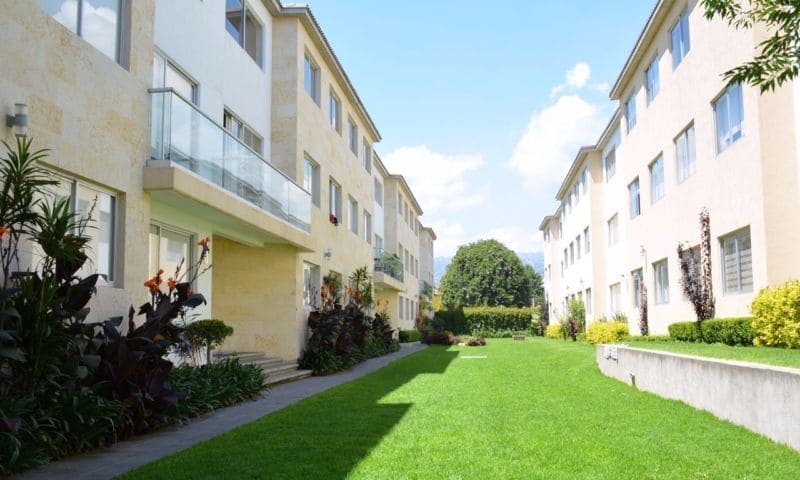
Most of the residential real estate is apartment buildings of 4-5 floors. For example, an apartment with 3 bedrooms, 2 bathrooms, and a garage in this house will cost $ 215,000 US dollars. This is a democratic price at which you will get comfortable housing.
The best way to get to Lake Xochimilco
From Mexico
Lake Xochimilco is just 45 minutes south of the center of Mexico City. The capital has a very good transport network, so you can take a bus, subway or take a taxi. One convenient route: take Bus Ruta 9 from Metro Jamaica to Xochimilco Centro.
For the tourists from other countries
Foreign tourists make up the majority of travelers on the lake. To get to the Xochimilco, you must first fly to Mexico City Airport from your country. From the airport to the city center, the distance is about 4 miles. You should go to the town square by bus.
If you want to go to Lake Xochimilco not from the central part of the city, in any case, your task is just to get to any metro station, take the blue line and get to the Metro Jamaica station and change onto the Ruta 9 bus.
We hope this information was useful for you and will make your trip to Lake Xochimilco enjoyable!
Links
- Airport of Mexico – https://www.mexico-airport.com/
- Spain Club Xochimilco – http://www.clubespana.com.mx/
- Mexico City maps – https://mexicometro.org/
- Dolls Island –http://www.isladelasmunecas.com/
Frequently asked questions about Xochimilco
What is Xochimilco famous for?
For its UNESCO World Heritage canals, the colourful trajinera boats, the Aztec floating gardens (chinampas), the endangered axolotl and the eerie Island of the Dolls.
How much does a trajinera cost in Xochimilco?
The official rate is around 500 to 600 pesos per hour for the whole boat — not per person — so the more people you share it with, the cheaper it gets. Agree the price before boarding and bring cash.
How do I get to Xochimilco from central Mexico City?
Take Metro Line 2 to its southern end at Tasqueña, then switch to the Tren Ligero light rail and ride to the last stop, Xochimilco — about an hour in total. A taxi or ride-share takes 40 to 60 minutes from the central neighbourhoods.
What is the best time to visit Xochimilco?
A weekday morning for peace and clear photos; a Saturday or Sunday for the full party atmosphere with crowds, music and food. Boats operate roughly 9 a.m. to 6 p.m.
What are the chinampas?
They are artificial farming islands built in the shallow lake more than seven centuries ago — the original “floating gardens” that fed Tenochtitlán. Around six thousand farmers still cultivate them, and they are the reason for the site’s UNESCO and UN-FAO heritage status.
What is an axolotl, and can I see one?
It is a salamander that stays in its juvenile form for life and can regenerate lost body parts. Xochimilco is its last wild home; you can see them at one of the small refuges or ajolotarios along the canals.
What is the Island of the Dolls?
A chinampa hung with hundreds of weathered dolls, placed there by its late caretaker Julián Santana after a girl drowned nearby. It lies deep in the canals, and reaching the real island and back by trajinera takes around four hours.
Is Xochimilco safe to visit?
Yes, by day the main embarcaderos are well used by tourists and families and feel safe. Bring small bills, agree boat and mariachi prices up front, and keep an eye on your valuables, as you would anywhere busy.
Explore more in our complete guide to the lakes of Mexico — the biggest lakes, the regions, and the best ones to visit.


Interessanter Artikel
That is what I am talking about. bookedmarked indeed!
Thanks for the useful post! I wouldnt have discovered this otherwise!
thank you for that info